
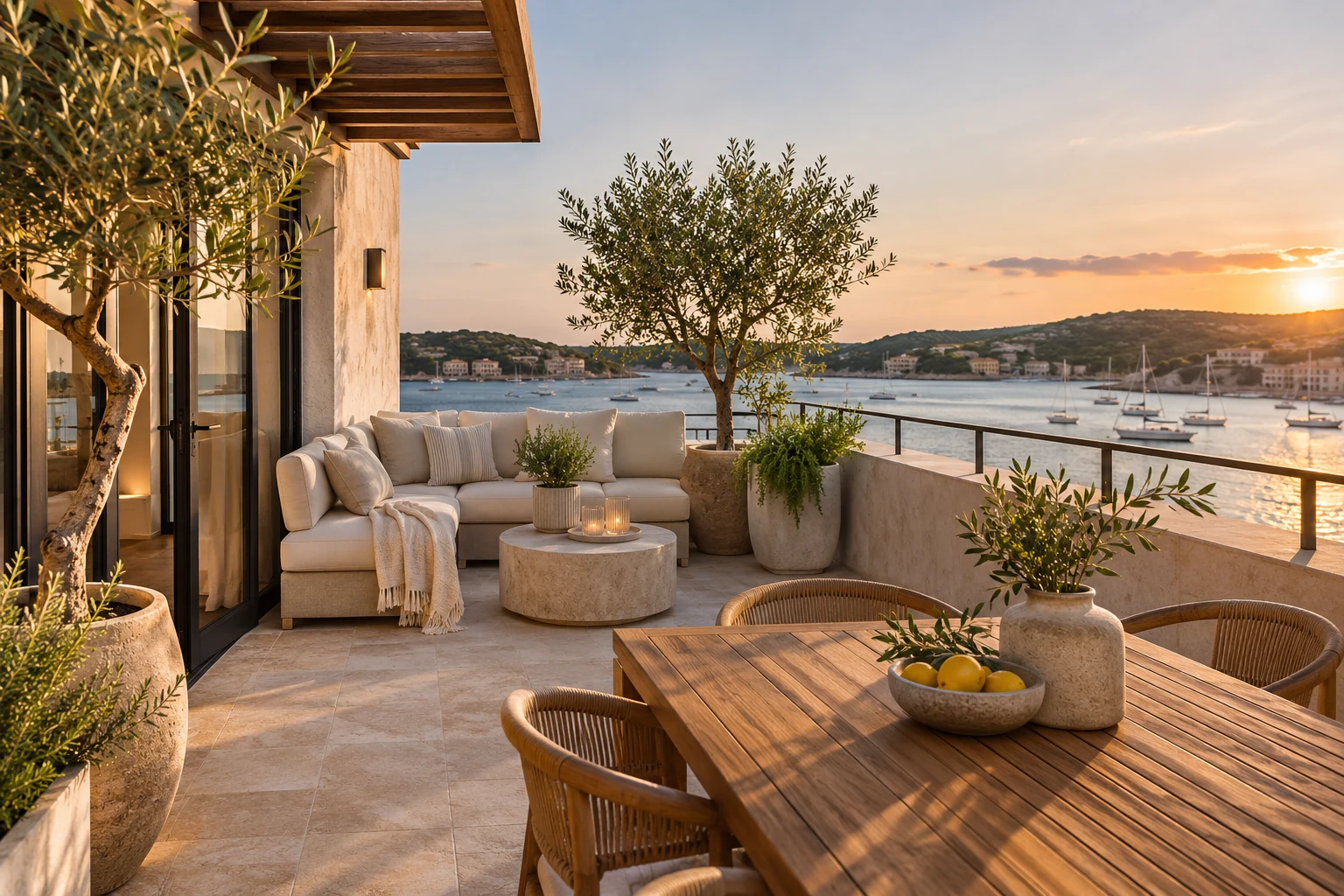
Shelter, drainage and a few well-placed pieces can matter more than a terrace filled with furniture.
Begin with how you will sit
A terrace can be a place for a quiet coffee, a small meal or a little planting. Choose one or two uses and leave enough space to move comfortably. Notice wind, shade and the position of doors before planning the furniture.
Understand the building
Ask about surface care, drainage, weight limits, planting and access for maintenance. In a shared building, the boundary between private use and common responsibility should be clearly documented. A terrace is an outdoor room with practical needs of its own.
Keep the arrangement simple
A small table, comfortable seat and a few suitable plants can make a generous difference. The Harbor Penthouse terrace shown in this template is a fictional visual study, not a recommendation about a real building’s structure or permitted use.
Notice the route and the season
Carry a cup and imagine the route from the kitchen to the place you would sit. Notice a door threshold, an exposed corner and where a chair could be moved into shade. Consider how cushions or small tools would be stored and whether a planter would block a maintenance route. A terrace is more inviting when its useful arrangements can change with the weather. Ask the relevant building team about care and permitted changes before planning anything that depends on a structure or a drainage detail.

Elena Marsh
Elena starts with the questions that shape an ordinary week: the route home, the way daylight moves through a room and the storage that keeps a space useful. She brings a clear written checklist to viewings and makes room for a second conversation before a decision.
Reader perspectives
Casey Morgan
I like the suggestion to leave room to move. Shelter and access for maintenance are practical questions that a photograph cannot answer on its own.
Original fictional reader perspective